


Gdańsk University of Technology · Faculty of Electronics, Telecommunications and Informatics
Bioelectronic Materials & Interfaces Lab
We design functional materials for next-generation medical electronics.
Department of Functional Materials Engineering
CysewskaLab research group
About us
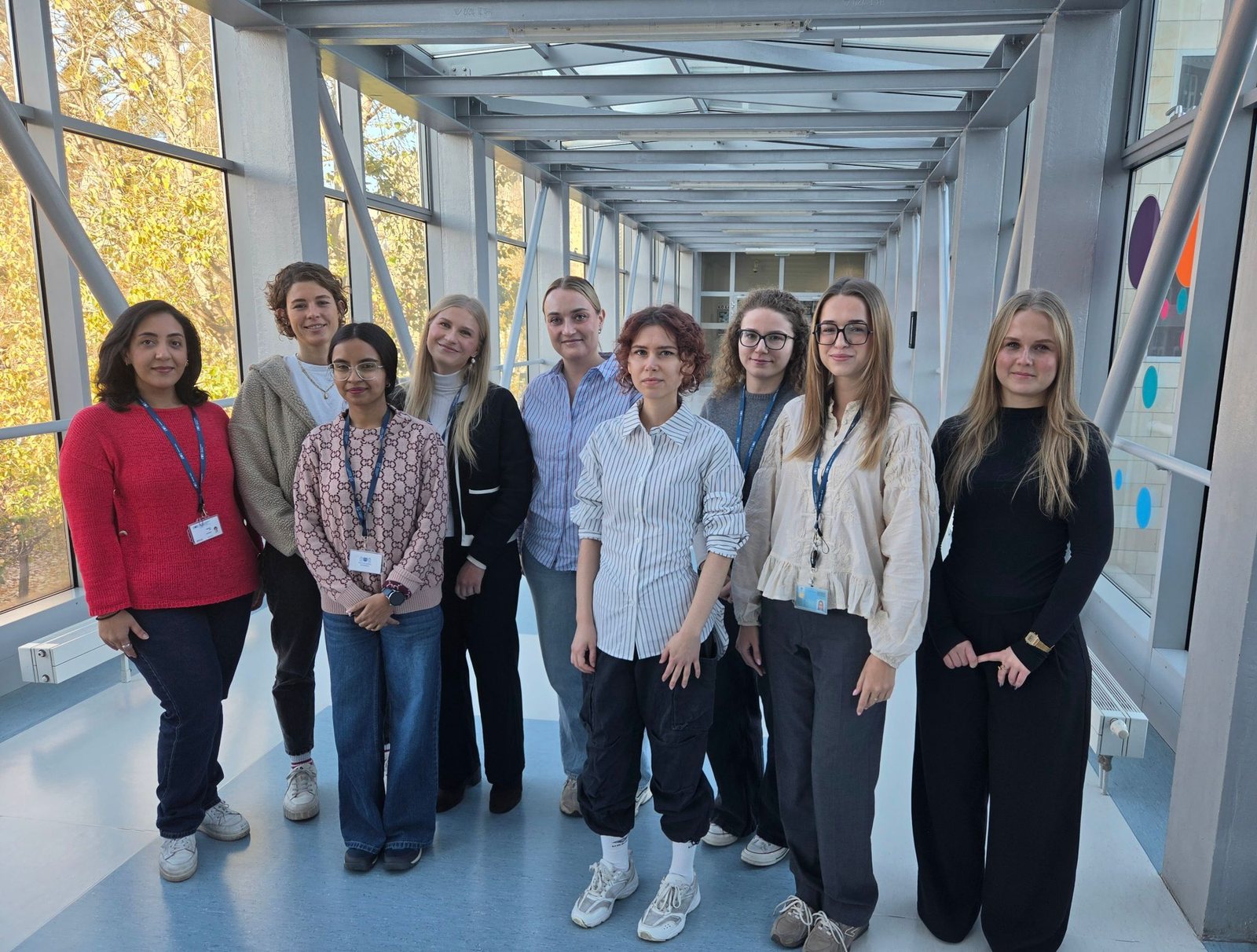
Welcome to the Bioelectronic Materials & Interfaces research group, where advanced materials and electronics are developed for innovative medical applications.
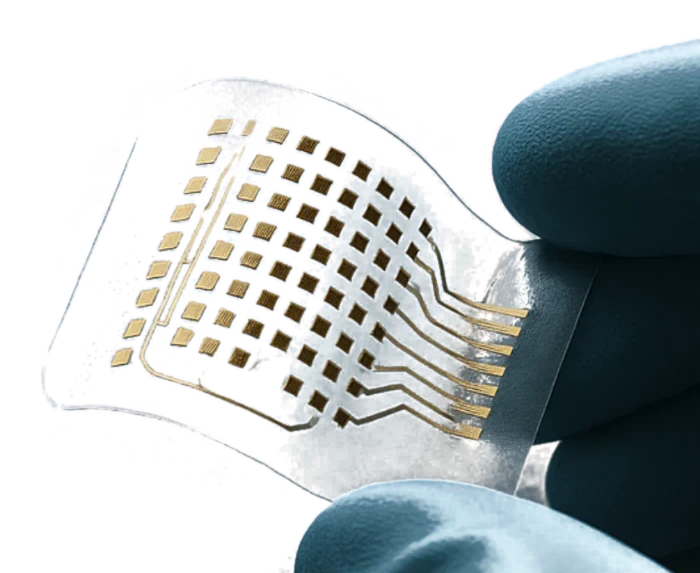
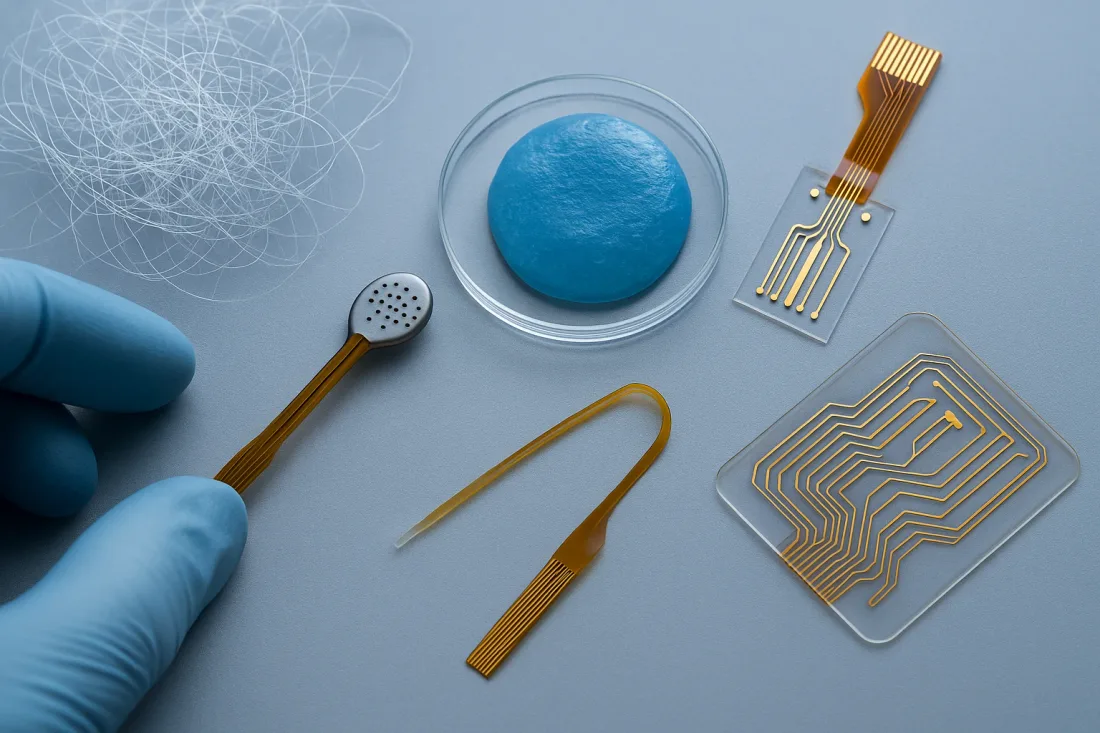
Our interdisciplinary team develops soft, functional materials — conducting polymers, hydrogels, nanofibre composites and modified elastomers — for bioelectronics, biosensing, neural interfaces and stent coatings. We combine materials science, biomedical engineering and microfabrication to create the next generation of solutions for healthcare.
We invite you to explore our ongoing projects, open positions, and our collaborations with academic and industrial partners across Europe.
What we work on
from the molecule to the deviceMaterials synthesis
Natural and synthetic polymers, above all conducting ones, made in whatever form the application needs — from solid coatings to hydrogels and nanofibres.
Electrochemical and electrical characterisation
Our speciality: complete electrochemical characterisation, including under tissue-like conditions, and conductivity measurements on soft materials with set-ups we build ourselves.
Controlled release and degradation
Systems that release drugs, ions and other species, and studies of how materials degrade, followed by spectrophotometry and electrochemistry together.
Bio-interface applications
Where the materials end up: flexible electronics, cardiovascular stents, neural electrodes for brain–machine interfaces, and soft electrodes for hydrogen production.
Current projects
3NEURO-FIT
Bioadaptive neural microelectrodes with in vivo activated hydrogel contacts for personalised stimulation and recording of deep brain structures
Rethinking the electrode–brain interface itself: soft, volumetric microelectrodes whose contacts are conductive PEDOT hydrogel, 3D-bioprinted and biologically integrated.
Ongoingsince November 2026 · Foundation for Polish Science (FNP)

PoRaCoat
Innovative stent coating with a polyphenol–rapamycin complex featuring improved drug-release properties for combating restenosis
An innovative stent coating built from a PEDOT matrix with a polyphenol–rapamycin complex, aimed at in-stent restenosis.
Ongoingsince June 2024 · NCBR (Poland)

Conducting hydrogel composites as flexible systems for energy conversion and storage
Electrospun conducting hydrogels as flexible electrodes for catalysis and supercapacitors.
Ongoingsince September 2022 · National Science Centre, Poland (NCN)
News
all entriesSoft electrodes on Radio Złote Przeboje
Karolina and Izabela Lewandowska talked on air about the lab's research, the new FIRST TEAM project and electrodes for bioelectronics.
Injectable, degradable conductive hydrogels — a new paper with Oxford
New approaches to conductive hydrogels that can be injected and that degrade, published in Advanced Materials Technologies with colleagues from the University of Oxford.
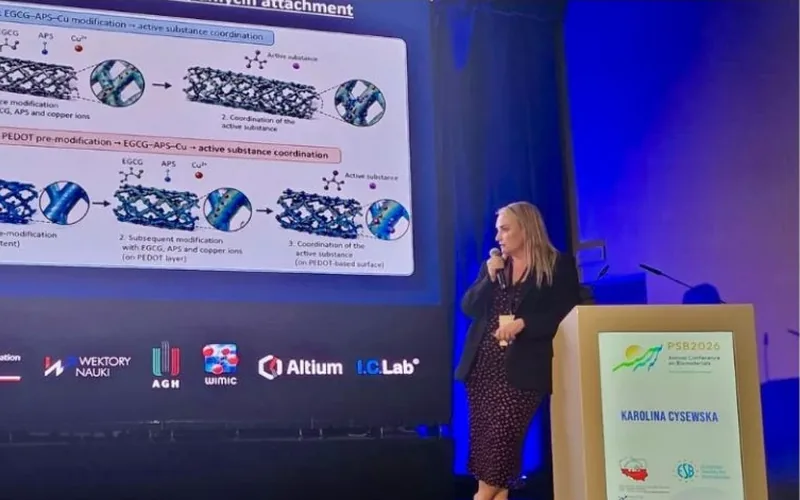
Electroactive stent coatings at the Polish Society for Biomaterials conference
An oral presentation on engineering electroactive interfaces on CoCr stents for drug delivery, given at the PSB conference in Rytro.
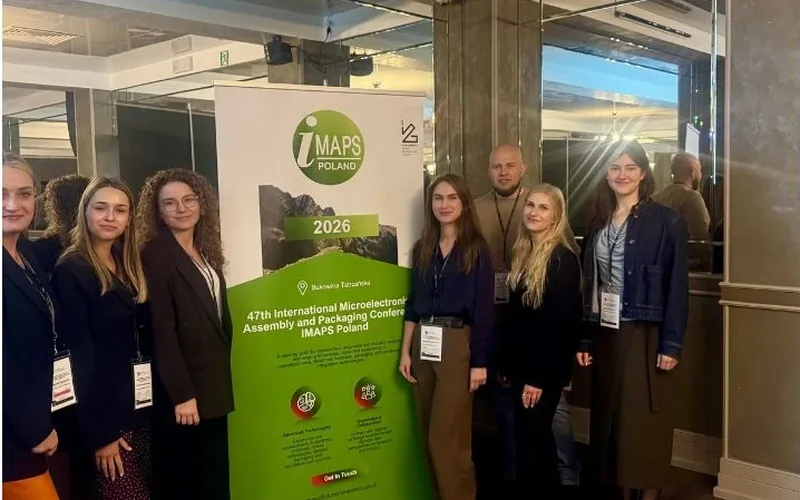
Three posters at the 47th IMAPS Poland & 18th COE Conference
Drug release from PEDOT films, conductive coatings on stents and ultrathin PEDOT:PSS on PDMS — the lab's contributions to a large showing from the department.
NEURO-FIT selected for funding in the FIRST TEAM programme
PLN 4 million from the Foundation for Polish Science to build bioadaptive neural microelectrodes with conductive hydrogel contacts — and a new team at Gdańsk Tech around them.
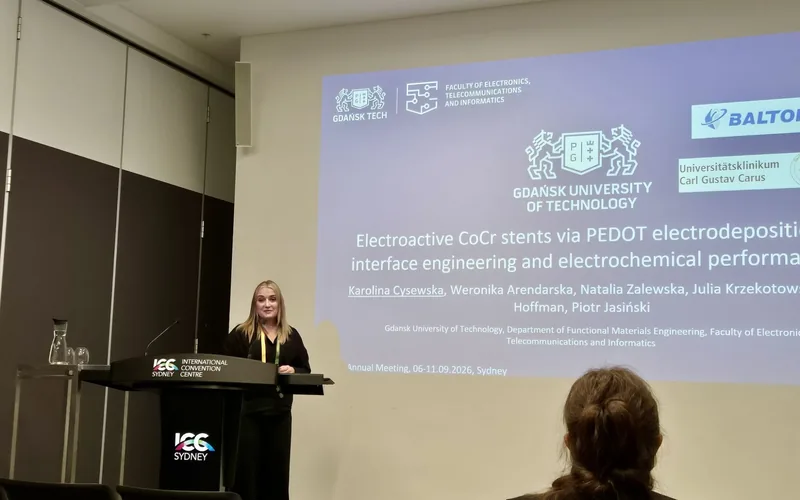
First PoRaCoat results presented at ISE 2026 in Sydney
A talk on depositing PEDOT directly onto commercial cobalt–chromium stents, given at the 77th Annual Meeting of the International Society of Electrochemistry.
Find us
Gdańsk, PolandAddress
Gdańsk University of Technology
Faculty of Electronics, Telecommunications and Informatics
Department of Functional Materials Engineering
ul. G. Narutowicza 11/12
80-233 Gdańsk, Poland
